
From Lab to Market: Women Ecopreneurs Take the Stage in Sanur
On a bright afternoon at Sudamala Resort Sanur, something more than a market was taking shape.
There were eco-product stalls, business presentations, interactive workshops, live music, the soft scent of natural dye, and the steady hum of women entrepreneurs meeting new customers, sharing their stories, and testing the products they had been carefully developing for months — and in some cases, years.
The Women Ecopreneurs Market Day, organized by Women’s Earth Alliance (WEA) and Pratisara Bumi Foundation (PBF), brought together participants of the Women Ecopreneurs Lab alongside local Bali brands for a day of market exposure, peer connection, storytelling, and real-time customer feedback.
For many of the women, this was their first opportunity to introduce their products directly to new buyers beyond their own communities. It was also a chance to test a deeper question: could the products they had been developing — rooted in local knowledge, environmental care, women’s leadership, and community resilience — resonate in a broader marketplace?
Building Power Across Indonesia
WEA and PBF’s partnership in Indonesia began in 2019 with the launch of the first Grassroots Accelerator Program, designed to support women grassroots leaders who were organizing for environmental protection, community resilience, and local solutions across the archipelago.
From the beginning, the work was never only about training individual leaders. It was about building power across Indonesia — connecting women who were protecting forests, restoring ecosystems, strengthening local economies, preserving cultural knowledge, and leading solutions in their communities.
When COVID-19 hit, the realities facing many women leaders in WEA and PBF’s network became even more urgent. Across Indonesia, families and communities were struggling with post-pandemic economic hardship. Women who were already serving as community anchors were also navigating unstable livelihoods, disrupted markets, and increased pressure to support those around them.
A clear message began to emerge from communities: women could not be asked to lead conservation and community resilience without also having pathways to sustainable income.
As Sarita Pockell, Senior Program Director at WEA, reflected, “Supporting women to design alternative livelihoods through eco-tourism and non-extractive forest products is a critical conservation strategy. Conservation succeeds when women and communities have viable ways to generate income while keeping forests standing.”
That insight helped shape the next chapter of WEA and PBF’s work together. In 2023, WEA and PBF began running eco-entrepreneurship programs to support women leaders in transforming local resources, traditional knowledge, and environmental commitments into viable, values-driven businesses.
From Training to Enterprise
The Women Ecopreneurs Lab, launched in 2025, builds on this longer journey.
The Lab supports women entrepreneurs from across Indonesia — from North Sumatra and West Sumatra to South Kalimantan, South Sumatra, Lampung, West Java, and Yogyakarta — as they develop products and strengthen business practices that are rooted in ecological sustainability, cultural preservation, and community benefit.
Participants work through the WEA Eco-entrepreneurship Toolkit, which guides them in refining their value propositions, strengthening sustainable business models, mapping supply chains, improving pricing and financial systems, and tracking their social, environmental, and economic impact.
This is where the idea of eco-entrepreneurship becomes concrete.
It is not only about making “green” products. It is about the decisions behind each product: choosing natural dyes instead of synthetic chemicals, sourcing from local farmers instead of cheaper outside suppliers, reviving disappearing ingredients and traditions, paying women and community members fairly, reducing waste, and building enterprises that return value to the people and places they come from.
Market Day as a Proving Ground
Market Day is where that work meets the real world.
It is one thing to develop a product in a training space. It is another to place it on a table in front of strangers who have never heard of the brand, do not know the story, and have no reason to stop unless something catches their eye.
For the women entrepreneurs, Market Day offered a rare and important opportunity to observe how customers responded in real time. Which products sparked curiosity? Which stories helped people understand the value? Which price points worked? What questions did buyers ask? What feedback could help improve packaging, messaging, product design, or market positioning?
“Market Day is their proving ground,” said Melisa of WEA Indonesia. “It is where they conduct live market research, gathering real-time feedback from actual customers. It is where we actively connect them to buyers, networks, and supply chain opportunities that are usually out of reach for grassroots women.”
Finding the right buyer profile — not just any buyer, but the people who understand and value what a product represents — is one of the hardest parts of building a sustainable business from a remote community. Market Day is one way WEA and PBF are helping women bridge that gap.
“I Never Would Have Thought We Could Bring Our Products All the Way to Bali.”
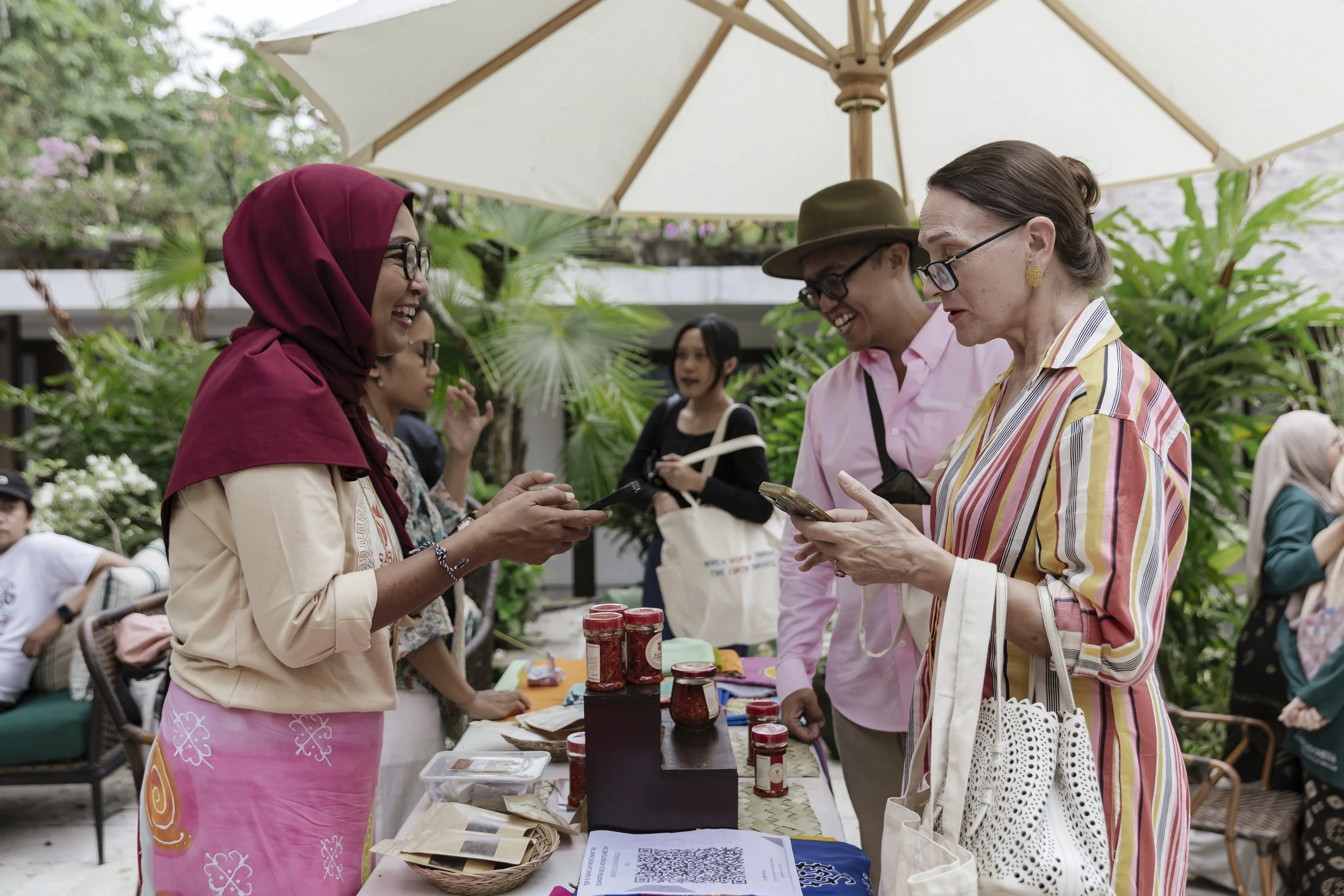
For Novi Rovika, Market Day meant bringing sambal to Sanur.
But not just any sambal.
Novi is the founder of SABAI, a business from West Sumatra producing sambal lado sabai made from lado dare, a local Minang chili that is slowly disappearing from the very cuisine it helped define. In Padang, imported chili from Java and Aceh has been quietly taking over. Meanwhile, sambal lado has had little presence in packaged form. Rendang receives international recognition. Sambal lado often remains the small dish on the side.
SABAI grew out of Novi’s desire to change that.
Her business is working to revive local chili varieties, support restored farmland in Lembah Harau, and connect traditional recipes with new buyers. But the work has not been simple. It has required finding farmers who still grow the local variety, working with women who know the traditional recipe and can produce consistently, and identifying customers who understand the flavor, story, and cultural value behind the product.
“We are still continuously doing research to refine our product toward eco and reach our potential market,” Novi said.
For SABAI, Market Day was not only a sales opportunity. It was part of that research — a chance to learn directly from customers, test the product in a new market, and imagine what might be possible beyond West Sumatra.
“I never would have thought we could bring our products all the way to Bali,” she shared.
The Women Entrepreneurs of Market Day
Each business featured at Market Day represented a different pathway into sustainable production. The women came from different regions, worked with different materials, and were at different stages of business development. What connected them was a shared commitment to building enterprises that support both community livelihoods and environmental care.
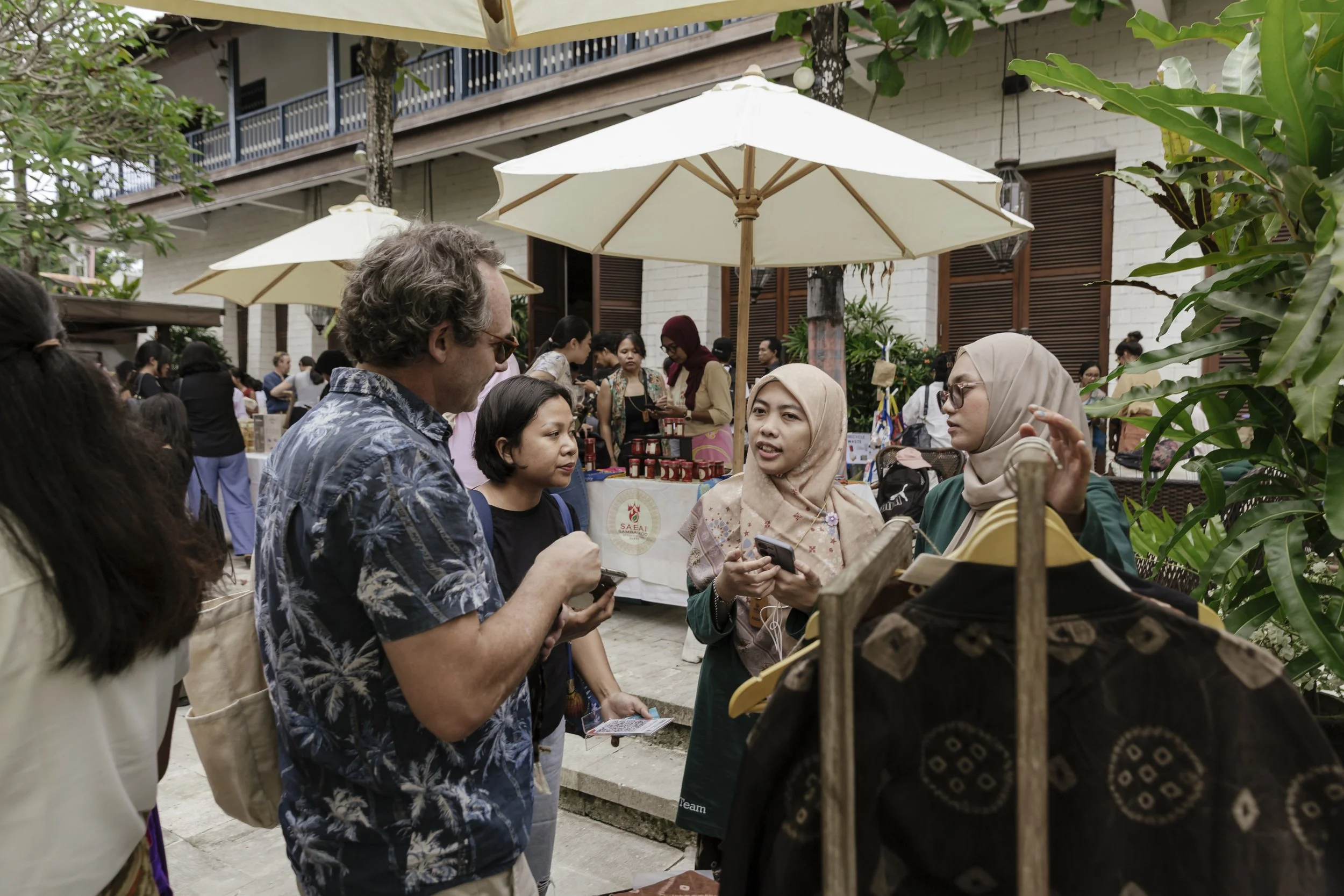
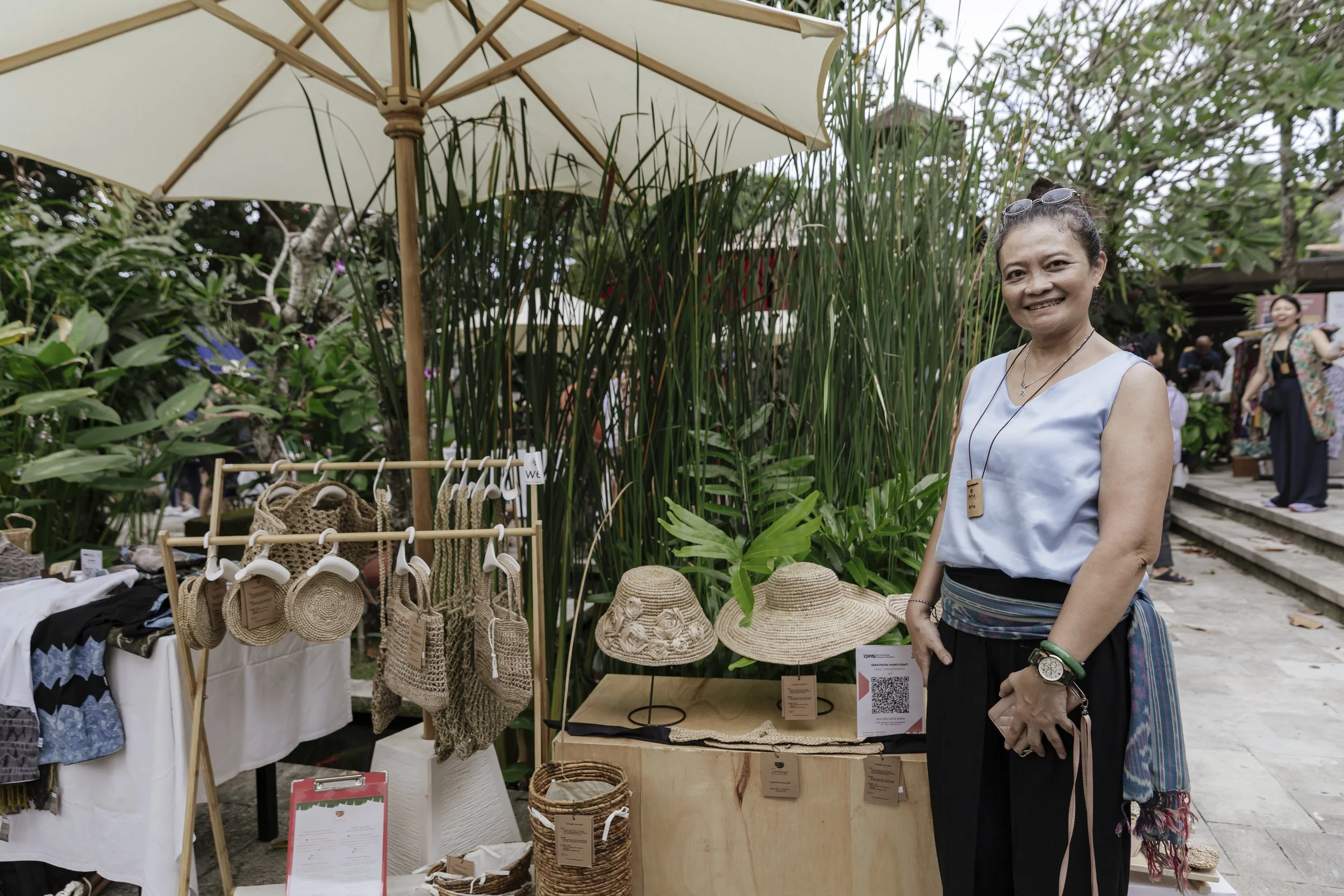
Seratnusa, working across Lampung and West Java, partners with local waste banks and artisans to transform banana trunk waste into handcrafted products. The enterprise began with an economic challenge: waste banks often face unstable income from recycling alone. By turning agricultural waste into higher-value products, Seratnusa is helping create another pathway for local income generation.
SABAI, from West Sumatra, processes local chili from restored farmland in Lembah Harau into ready-to-eat sambal. The business connects small farmers, women producers, and traditional Minang recipes with buyers who may be unfamiliar with the story and significance of the ingredient.
Kriya Kite, from South Sumatra, works to conserve gambir, a native plant that helps protect peatland ecosystems, by keeping the traditional craft of Jumputan Gambo alive through fashion, merchandise, and digital platforms.
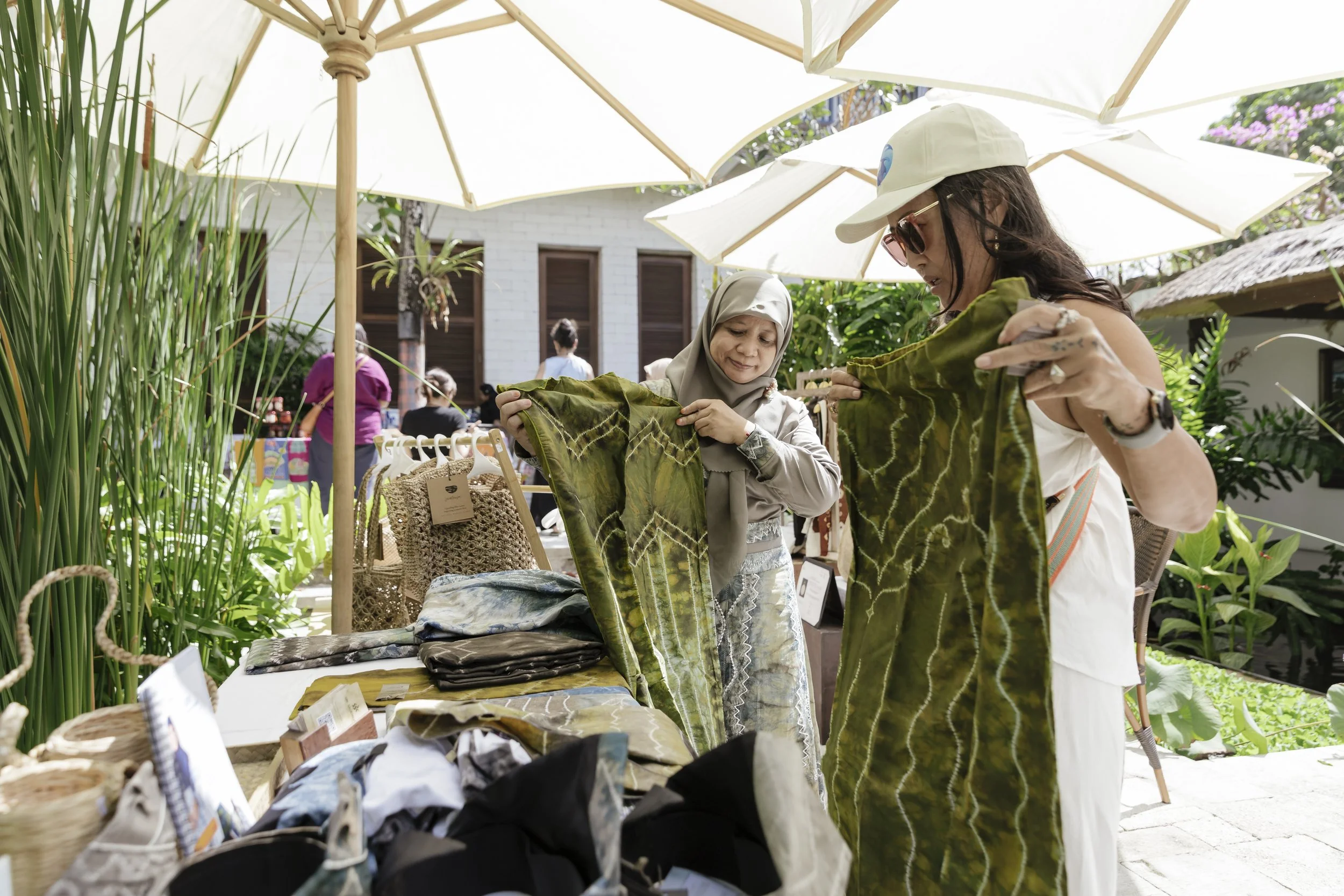
SBK Sasirangan, from South Kalimantan, produces traditional Sasirangan textiles using natural dyes instead of synthetic chemicals. The enterprise is also replanting indigo and mangroves to strengthen its own supply chain while training local women in sustainable textile production.
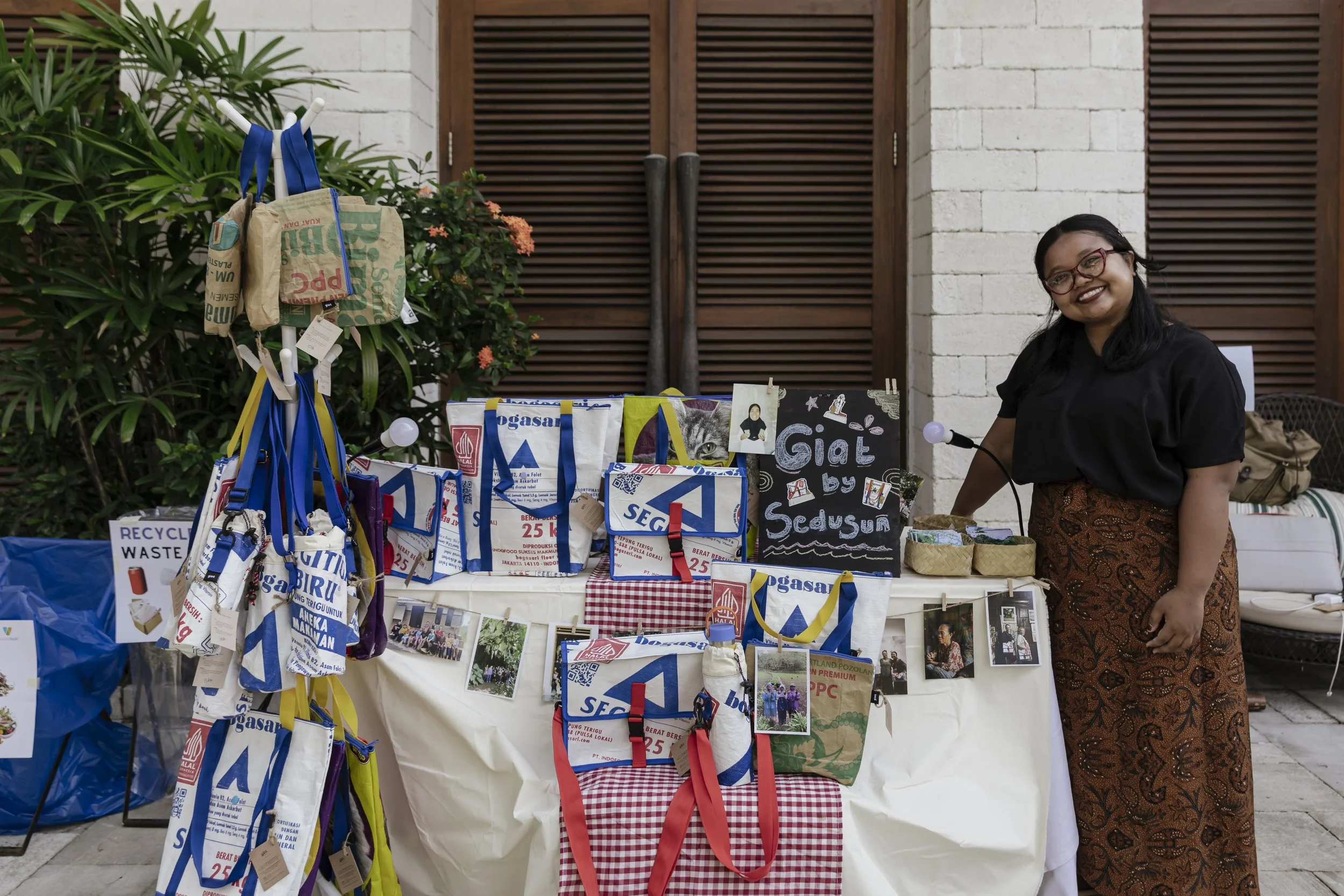
Giat by Sedusun, from Yogyakarta, responds to rural economic decline and youth migration by activating the skills of local tailors in the village. The enterprise transforms discarded materials, including cement sacks and used banners, into upcycled functional products.
Together, these businesses show what eco-entrepreneurship can look like when it is grounded in place, culture, and community leadership.
More Than a Product
Every product at Market Day carried a decision inside it.
A decision to protect local biodiversity.
A decision to keep cultural knowledge alive.
A decision to turn waste into value.
A decision to pay women and community members fairly.
A decision to build economic resilience without sacrificing environmental care.